
Welcome back to Building Tomorrow: Insights for Modern Home Builders.
In our last discussion, we talked about why a seamless client handoff and strong “post close process” are essential. Today, let’s zoom out and look at the bigger picture, how AI in home building is transforming the entire residential construction industry.
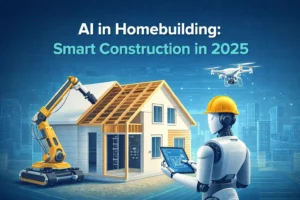
AI isn’t just a buzzword anymore. It’s actively powering the next generation of residential construction technology. From planning and execution to post-handover homeowner support, the adoption of AI tools revolutionizing residential construction is helping builders operate faster, smarter, and more profitably.
This shift isn’t about replacing humans. It’s about empowering builders with intelligent tools that handle complex data, predict problems, and streamline workflows. Builders who embrace construction AI now will stay competitive, deliver higher-quality homes, and create an exceptional construction client experience.
I. Why AI in Construction? The Industry’s Evolution
For many years, construction lagged behind other industries in digital adoption. That’s changing quickly, especially in the U.S. residential construction market.
Modern home building involves:
- Complex material logistics
- Unpredictable timelines
- Subcontractor coordination
- Demanding client expectations
- Strict budgets
- Real-time decision-making
Manual systems often fall short. Delays, budget overruns, and quality issues are common.
This is exactly where AI for builders steps in.
What Construction AI Brings to the Table
- Higher operational efficiency
- Significant cost reduction
- Safety improvements
- Accurate forecasting
- Better quality control
- Stronger client satisfaction
AI doesn’t just automate tasks; it gives builders insights they could never get manually. It identifies patterns, predicts risk, and helps deliver smoother projects, and a more reliable post close process.
II. The Top 5 AI Tools Revolutionizing Residential Construction
Let’s break down the five AI technologies making the biggest impact today.
1. AI-Powered Predictive Analytics for Project Management
Imagine being able to predict when a project will exceed the budget or fall behind schedule before it happens. That’s the power of predictive analytics in construction.
How It Works
AI studies massive datasets:
- Past project timelines
- Subcontractor performance
- Material delays
- Weather patterns
- Budget histories
Then it analyzes your new project and forecasts potential risks, identifying issues long before they appear.
Builder Benefit
- Early warning system for delays
- Better scheduling
- Smarter resource allocation
- Fewer last-minute crises
- On-time delivery → smoother post close process
This is one of the most valuable AI tools residential construction can adopt.
2. Generative Design and Optimization
This is where AI shows its creative side.
Generative design helps builders explore thousands of design possibilities in minutes.
How It Works
You input:
- Budget
- Materials
- Energy efficiency goals
- Lot size
- Client preferences
AI then generates optimized floor plans, layouts, and material combinations, often revealing options you wouldn’t have considered.
Builder Benefit
- Faster design cycles
- Reduced material waste → direct cost reduction
- Multiple ready-to-present design options
- More sustainable, high-performing homes
3. Robotics and Automation for Construction Tasks
Robotics isn’t “future tech” anymore, it’s here.
Robots now assist with tasks like:
- Bricklaying
- Drywall installation
- Welding
- Precision cutting
How It Works
Robots are programmed to execute repetitive tasks with high accuracy, speed, and precision.
Builder Benefit
- Faster construction timelines
- Improved consistency
- Reduced labor cost for specific tasks
- Better job site safety
- Higher overall project efficiency
4. Drones with AI for Site Monitoring and Progress Tracking
AI-powered drones are becoming essential tools for modern builders.
How It Works
Drones collect high-resolution images and video while AI analyzes the data to track:
- Construction progress
- Site safety issues
- Material inventory
- Plan deviations
- Structural alignment
Builder Benefit
- Real-time project visibility
- Early issue detection
- Better reporting to stakeholders
- Stronger quality control
- More accurate documentation
This technology drastically upgrades project management efficiency.
5. AI-Powered Client Experience Platforms (Flannel.ai)
After the build is done, the relationship with the homeowner still matters.
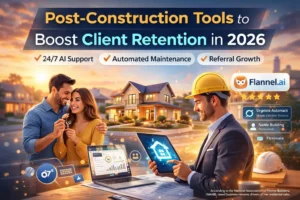
This is where Flannel.ai makes a huge impact on the post close process.
How Flannel.ai Works
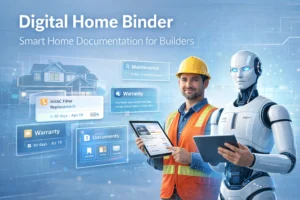
- Homeowners ask questions → AI instantly answers by reading their digital binder
- Fewer phone calls and support requests for your team
- Homeowners can submit detailed service requests with photos
- Builder teams manage everything from one centralized dashboard
- AI converts answers into tasks and maintenance reminders
- Proactive notifications help prevent costly issues
Builder Benefit
- Support workload drops dramatically
- Faster response times
- Happier homeowners → better client satisfaction
- Stronger long-term customer relationships
- Professional, consistent communication
This is one of the most practical and impactful AI tools revolutionizing residential construction, especially for builders who prioritize customer experience.
Conclusion
The AI revolutionizing construction is already here. Builders who embrace AI in home building gain a competitive advantage through:
- Faster project delivery
- Higher accuracy
- Reduced costs
- Improved design
- Smarter risk management
- Stronger client experience
From predicting delays to optimizing home designs and delivering a smoother post close process, AI is now a necessity, not a luxury.
Builders who adopt these tools will lead the next chapter of residential construction. Builders who ignore them risk falling behind in a rapidly evolving, tech-driven market.
1. How is AI transforming residential construction?
AI is improving project planning, predicting delays, optimizing design, and enhancing the client handoff process. Builders can operate faster, save costs, and deliver a better homeowner experience using intelligent, automated workflows.
What is predictive analytics in construction?
Predictive analytics uses historical project data to forecast risks such as delays, budget overruns, or material shortages. It helps builders make proactive decisions before problems occur.
How does generative design help home builders?
Generative design creates thousands of optimized layout options based on budget, materials, energy efficiency goals, and client preferences, helping builders reduce waste and accelerate approvals.
Why are drones important in residential construction?
AI-powered drones provide real-time site visibility, detect safety issues, track progress, and improve documentation accuracy. This results in better project management and fewer surprises.
How does Flannel.ai improve the post-close process?
Flannel.ai instantly answers homeowner questions, manages service requests, sends maintenance reminders, and centralizes all communication, reducing builder support workload and increasing client satisfaction.
Do AI tools reduce construction costs?
Yes. AI minimizes delays, improves material planning, reduces rework, and automates repetitive tasks, resulting in significant cost savings across the entire project lifecycle.
Are AI tools difficult for builders to adopt?
Most modern AI platforms are designed with ease of use in mind. Builders can start small (like predictive analytics or AI-assisted client support) and scale gradually as they see results.